
Five Improv Games for Your Drama Class
Since our previous blog article on warm up games got much traction, we thought we’d write another one. This time, it’s on improv games. These games work for both primary and secondary students - it’s the way you deliver it to them that creates that differentiation.
What Are You Doing?
Develops: Concentration, fun, spontaneity, accepting offers.
Details: A participant stands on stage and acts out an everyday movement eg – brushing their teeth. The next particpant steps forward and asks “What are you doing?” The player in the middle must say something different to what they are actually doing eg –“walking the dog” they then step out while the other player does what they said. Repeat until each participant has had a turn.
Party Quirks
Develops: Spontaneity, Advancing Offers
Details: The faciliator places a table and four chairs on the stage. One participant plays the part host, three participants play the party guests. The host goes to the room next door to prepare some snacks. While they are there, the facilitator and class allocates each guest with a quirk - that can be physical, verbal, behavioural… you name it. An example of three quirks could be that a guest thinks they’re a duck, one guest can only reply in questions and one guest doesn’t like the host. Once the host returns from the room next door, the game starts. The host needs to entertain their guests by asking them questions, with the guests having to reply making their quirk as explicit as possible. At the end of the minute, the host needs to guest what each quirk was.
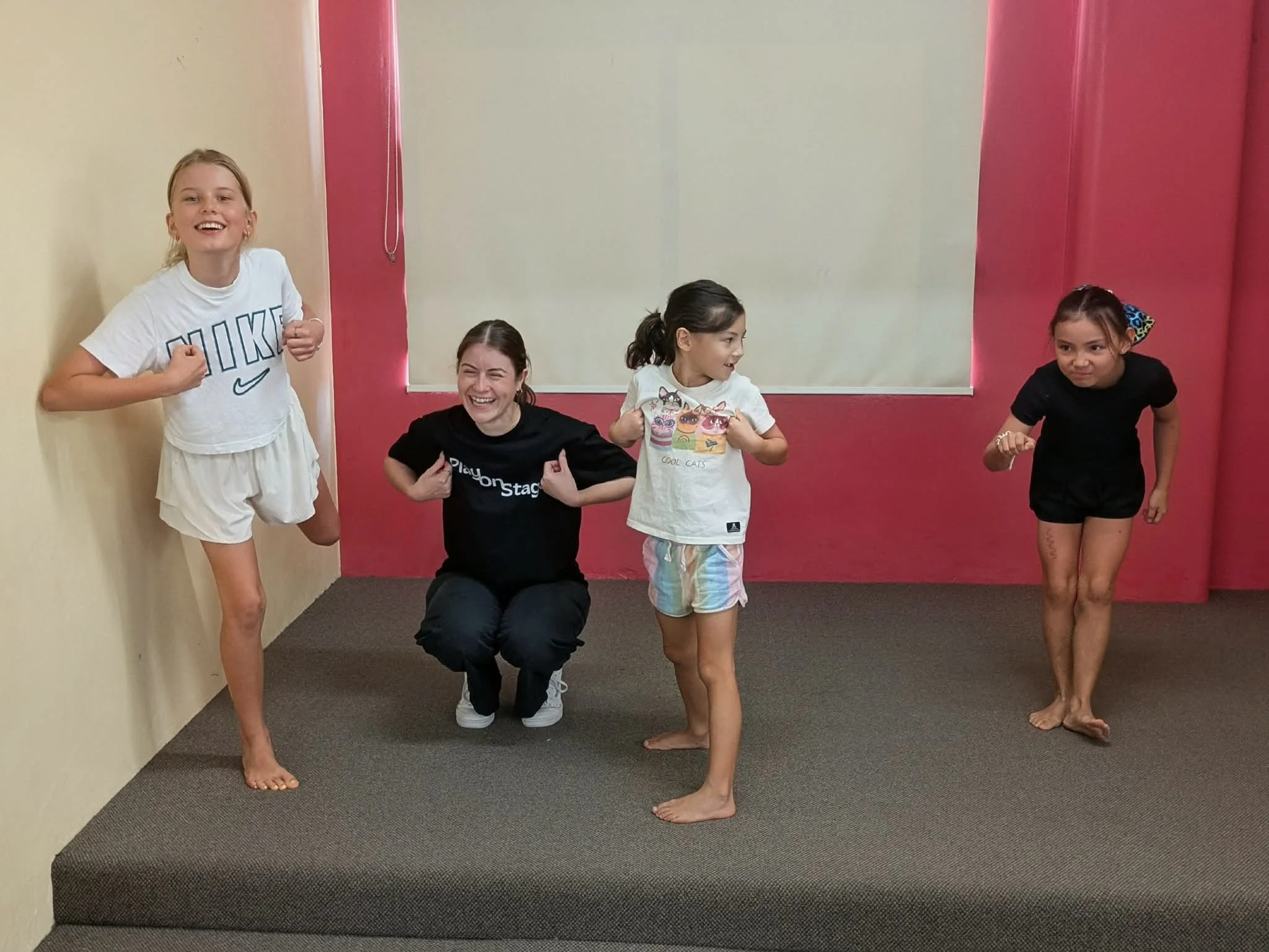
Doctor Damage
Develops: Spontaneity and Improvisation
Details: The faciliator selects three participants: one to be the patient, one to be the doctor and one to be a nurse doctor and a nurse. The doctor and nurse stand on stage. The patient goes onstage and tells the doctor who they are feeling. Eg. ‘Doctor, doctor, I hurt my nose. Then the doctor needs to think of a silly and creative reason as to why they’ve hurt their nose. Eg. That’s because the moon fell from the sky and landed on it. Then the doctor gets the nurse to grab some ingredients to apply to the patient. These can range from silly to practical. Eg. the earwax of a rat, a bandaid and fairy dust. Once the nurse is back, the doctor gets the nurse to apply everything to the patient (making sure that the nurse doesn’t physically touch the patent) before sending them home.
Why Are You So Late?
Develops: Spontaneity, Ensemble Listening, Improvisation
Details: The facilitator chooses one participant to be the boss, one participant who is running late for work and two participants to be the workers. The workers stand next to each other facing towards the boss, who has their back to them. the faciltiator gives the workers a shop: Eg, florist, bookshop, shoe store etc. The game starts by the person running late running onto the stage and the boss saying ‘why are you so late’. The works then need to mime why the person is late, with the person being late having to interpret the mimes into sentences.. At any point the boss can turn around and check up on the workers. At the end of the game, the boss needs to decide whether they fire the worker or give them a second chance..
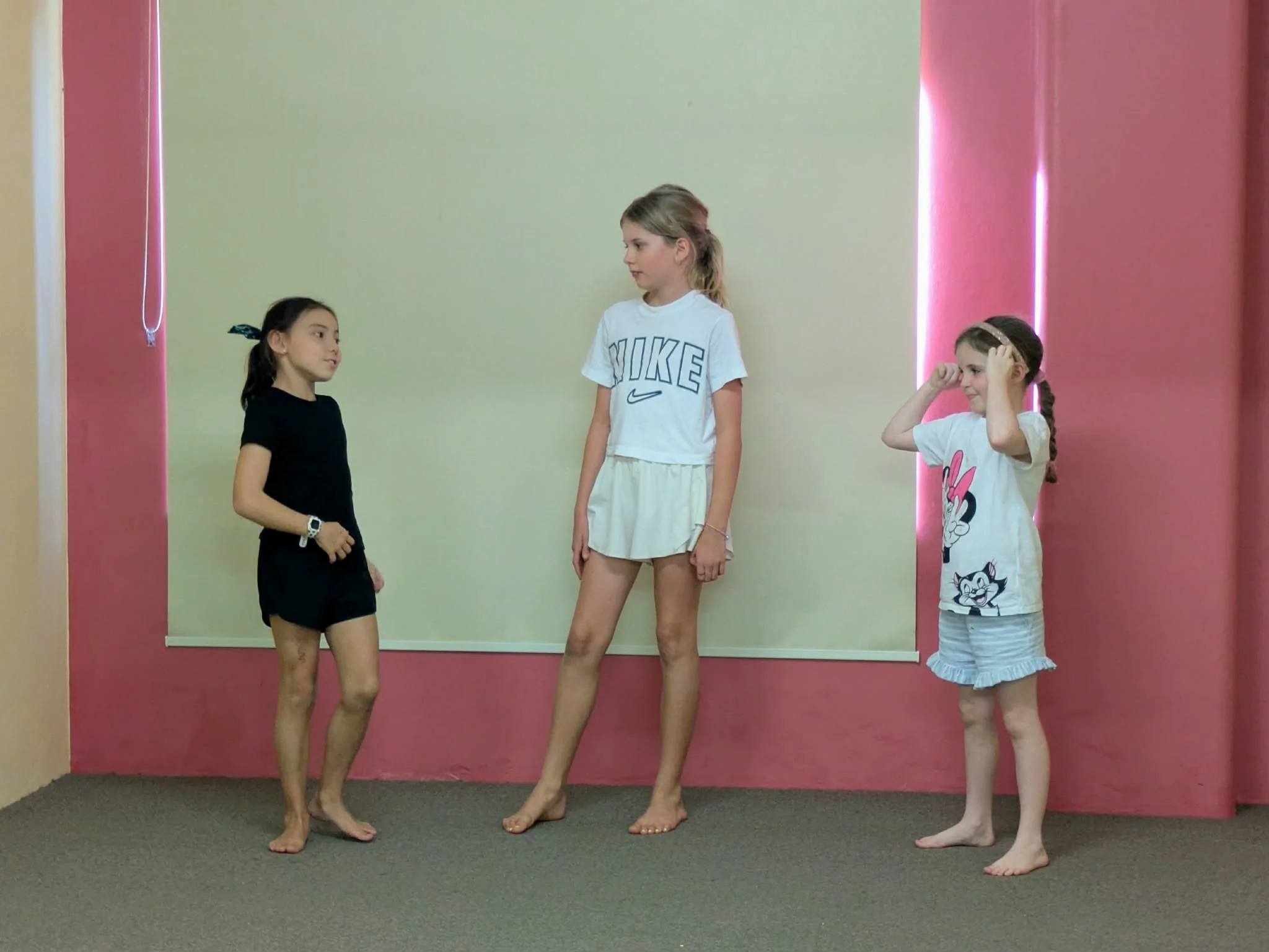
Death In A Minute
Develops: Improvisation and story building.
Details: The facilitator selects a group of three-four participants and gives them a setting. The participants have one minute to develop a scene that has a beginning, middle and end and contain interesting characters. The scene must last for one minute and within the scene, one character must die. However, the reason for the death needs to make sense - a participant can’t just unexpectedly drop to the floor. With our Play on Stage students, we emphasis foreshadowing to the death. Eg. The setting is a bookshop and straight away a participant says ‘that shelf doesn’t look too stable...’
Improv Drama Games Anyone Can Play
We hope you enjoyed reading about these five exciting improv games that you can play at home or at your drama class. If you would like to know more about Play on Stage’s term-based programs or would like to register your child, then visit our Primary Acting page today!.