
5 Drama Devising Activities You Can Try at Home or in the Classroom
Sometimes the hardest part of making a play is figuring out where to begin.
Devising can make that first step a little easier. Rather than starting with a finished script, performers begin with an idea and discover the story through play. A character might appear during an improvisation or a strange object might inspire an entire adventure. One unexpected line can send a scene somewhere nobody planned.
At Play on Stage, devising is an important part of how we encourage young people to explore their own ideas. Whether you are a Brisbane drama teacher looking for a classroom activity or a parent with a young storyteller at home, here are five simple ways to get started.
1. The Mystery Object
Place an everyday object in the middle of the room. It could be a key, an old book, a hat or something equally ordinary.
Now ask your performers to imagine that this object is incredibly important. Who owns it? Why does somebody else want it? What might happen if it disappears?
Give students a few minutes to develop a scene around their answers. The aim is to see how quickly an ordinary object can become the centre of a much bigger story.
Younger students may enjoy giving the object magical powers, while older students can explore why it matters emotionally to a character.
2. Start With a Frozen Picture
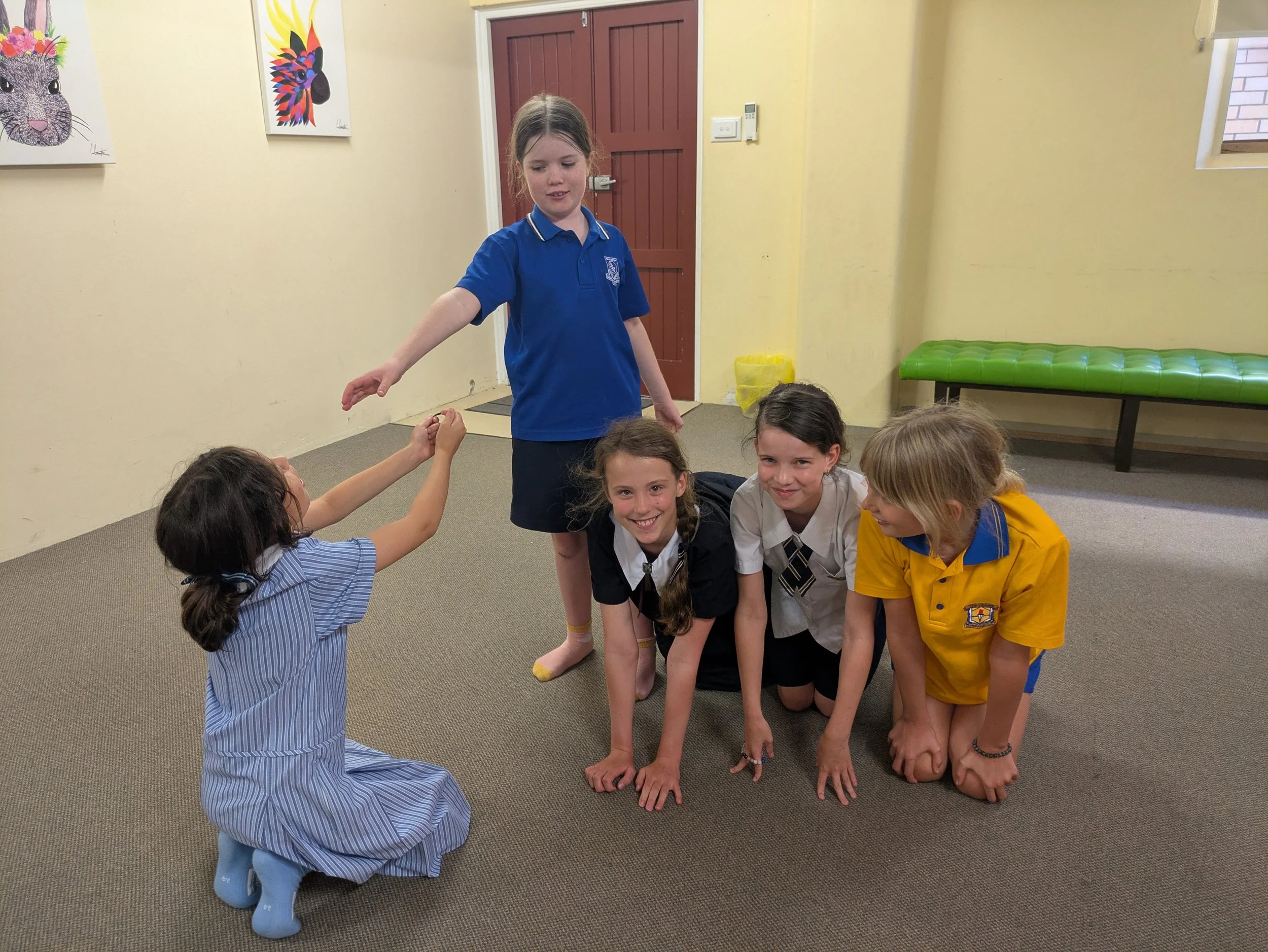
Ask a group to create a frozen image showing an interesting moment. Perhaps somebody has just received surprising news. Maybe two characters have discovered something they were never meant to find.
Once everyone is frozen, ask each performer what their character is thinking at that exact moment.
Then bring the picture to life. Students can improvise what happens immediately afterwards before experimenting with what might have happened five minutes earlier. Suddenly, a single image has created the beginnings of a story.
3. Put a Character in the Hot Seat
Choose one performer to become a character. The rest of the group can ask them questions about their life. Where do they live? What are they frightened of? What happened to them yesterday?
The performer answers while staying in character, even if they have to invent the answers on the spot.
This activity can uncover details that nobody knew when the character was first created. One answer might reveal a secret or introduce another person who needs to appear in the play. Before long, the group has much more than a character. They have a world beginning to form around them.
4. Give Them a Problem
Stories become much easier to devise when somebody wants something and something gets in the way.
Give your performers a simple problem such as:
The lights have gone out during the school concert. Or, nobody can remember where the birthday cake has gone.
Let the group improvise a solution without planning the scene beforehand. Afterwards, talk about what happened. Which moments were interesting? Did an unexpected character emerge? Was there a moment everyone found funny?
The strongest discoveries can become part of the next version of the scene.
5. Change One Thing
Create a short everyday scene, such as two friends waiting for a bus. Perform it once and then change one thing.
Perhaps the bus never arrives. Maybe one character knows something the other does not. Perhaps the scene is suddenly taking place one hundred years in the future. Keep experimenting and notice how each change affects the story.
This is a great reminder that devising does not require someone to have the perfect idea straight away. Stories often become interesting because performers are willing to try something, see what happens and change it.
Let the Story Surprise You
Devising gives young people permission to discover a story as they create it. There does not need to be a perfect script waiting at the beginning.
For Brisbane teachers and families looking for engaging drama activities, these exercises can be adapted for different ages and group sizes. Give young performers a starting point, leave some room for unexpected ideas and see where their imaginations take the stage.
Want to learn more? Visit our Primary acting page to discover how we help our students shape their stories on stage.